


1. Look out for your child’s sleep cues
It helps both you and your child when you recognise that your child is getting tired. Spotting these cues also helps you plan your daily activities. Wondering whether you still have time to go to the supermarket? Check whether your baby is showing these sleep cues:
- Yawning
- Crying or whining
- Looking pale
- Rubbing their eyes
- Having red cheeks and/or ears
- Being over-alert and responding to everything
- Fiddling with body parts, such as ears or hair
- Looking away and responding more slowly
When you recognise one of these sleep cues, it is time to get your child ready for sleep. Change their nappy, offer your child another bottle or sandwich if they need one and then put on their sleeping bag. Sing another song, give them a cuddle and children often fall asleep in no time.
Does your child seem alert or happy again after these sleep cues when you pick them up or comfort them? This is often just a reaction to the stimuli around them. That is why it is still a good idea to put your child to bed.
2. Create good sleep hygiene
All the small behavioural habits we can use to sleep better are called sleep hygiene. Ways to improve sleep hygiene include:
- Make sure the room is tidy. This helps stop your child’s thoughts from being distracted by the things around them. It also helps them reach the deeper sleep phase, which contributes to feeling rested.
- Make sure it gets dark in time in the evening. You can do this by dimming the lights, leaving the TV off or closing the curtains. During the day, it is better to keep your child’s bedroom light. This helps them get used to the difference between day and night.
- Make sure the room is cool and well ventilated. It is important that your child’s bedroom is well ventilated and has the right temperature. A temperature of 16 to 18 degrees is ideal for sleeping.

Sleeping at our childcare at CompaNanny
Are you curious about how we help children sleep well at CompaNanny? Visit one of our branches. We would love to tell you more!
3. Let your child get used to sleeping with sounds
For example, vacuum the area around the bedroom. This helps your child become less likely to wake up startled by every sound. And if he or she does wake up, do not take your child out of bed straight away. Your child may not have finished sleeping yet, but may have just completed a sleep cycle and is therefore sleeping more lightly or waking briefly in between.
4. Let your child sleep in their own bed and at fixed times
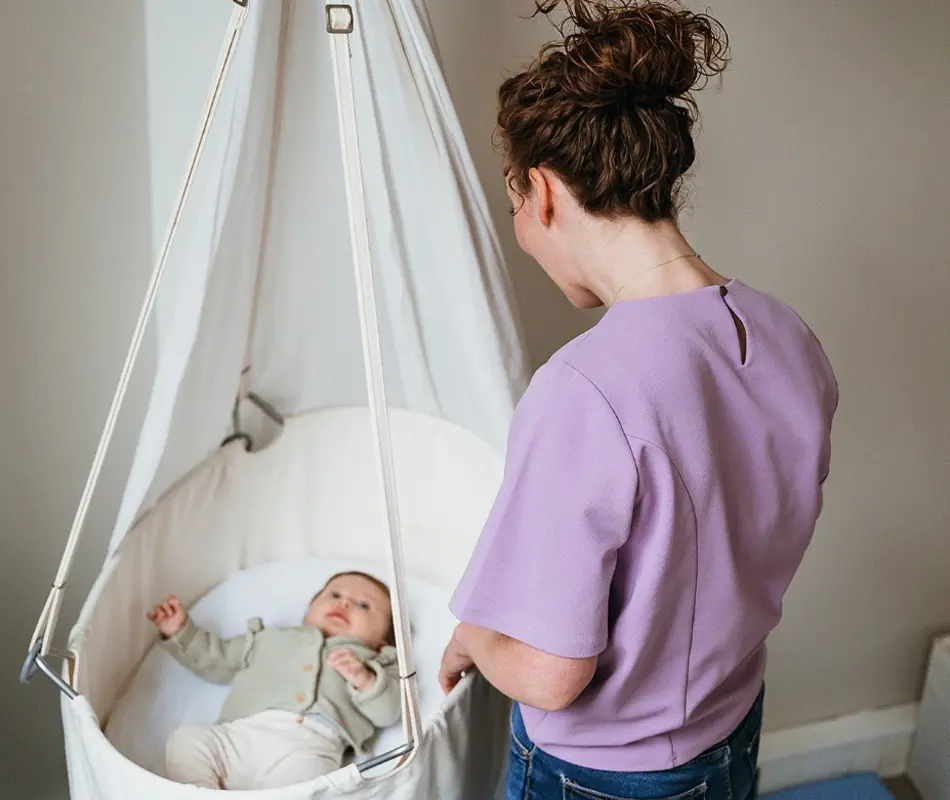
Do you prefer sleeping in your own bed? The same applies to children. By putting your child in their own bed at fixed times, your child gets used to the routine and the room. The body also starts producing the sleep hormone melatonin at the right time automatically. This helps your child fall asleep more easily.
When a child can fall asleep by themselves, and does not need to be rocked to sleep, he or she is not dependent on an adult. This contributes to a child’s independence, autonomy and self-confidence. So, preferably avoid letting your child sleep on your lap, in the playpen or in a bouncer. Plan your day so your child can sleep in their own bed and at fixed times.
The sleep cycle of children
Babies go through a sleep cycle from light to deep sleep in about 45 minutes. In adults, this takes 90 to 100 minutes. So it is completely normal for children to wake up more often. This does not have to be a problem, as long as your child can fall asleep again afterwards. With the tips in this blog, you help your child sleep through more easily.
5. Let your child sleep during the day when needed
Many parents think keeping their child awake during the day helps them sleep better at night. Yet research shows the opposite is true. An overtired child finds it harder to give in to sleep. And once your child has fallen asleep, he or she wakes up more often because they have more stimuli from the day to process. That is why it helps to follow your child’s natural sleep rhythm during the day too.
6. Stick to the sleep rhythm
At weekends or during holidays, it can be tempting to bring your child to bed later or let them sleep in for longer. It is understandable that this happens now and then, and that is not a problem. It is best to keep the difference to a maximum of 1.5 hours compared with the times your child normally goes to sleep or wakes up. This helps prevent your child’s sleep rhythm from becoming disrupted.

7. Create a sleep ritual
By creating structure and rituals, you help your child recognise the rhythm and give in to it. An example of a sleep ritual is always having a bath first, then putting on the sleeping bag and then reading a book in bed. Keep a fixed order in this routine too.
How newborn babies sleep
Would you like to know more about sleep in young children? Listen to our episode: Sleep in a newborn baby, how do you help your child become an independent sleeper and find a rhythm? from De Opvoedcast.
*Our podcast is in Dutch.